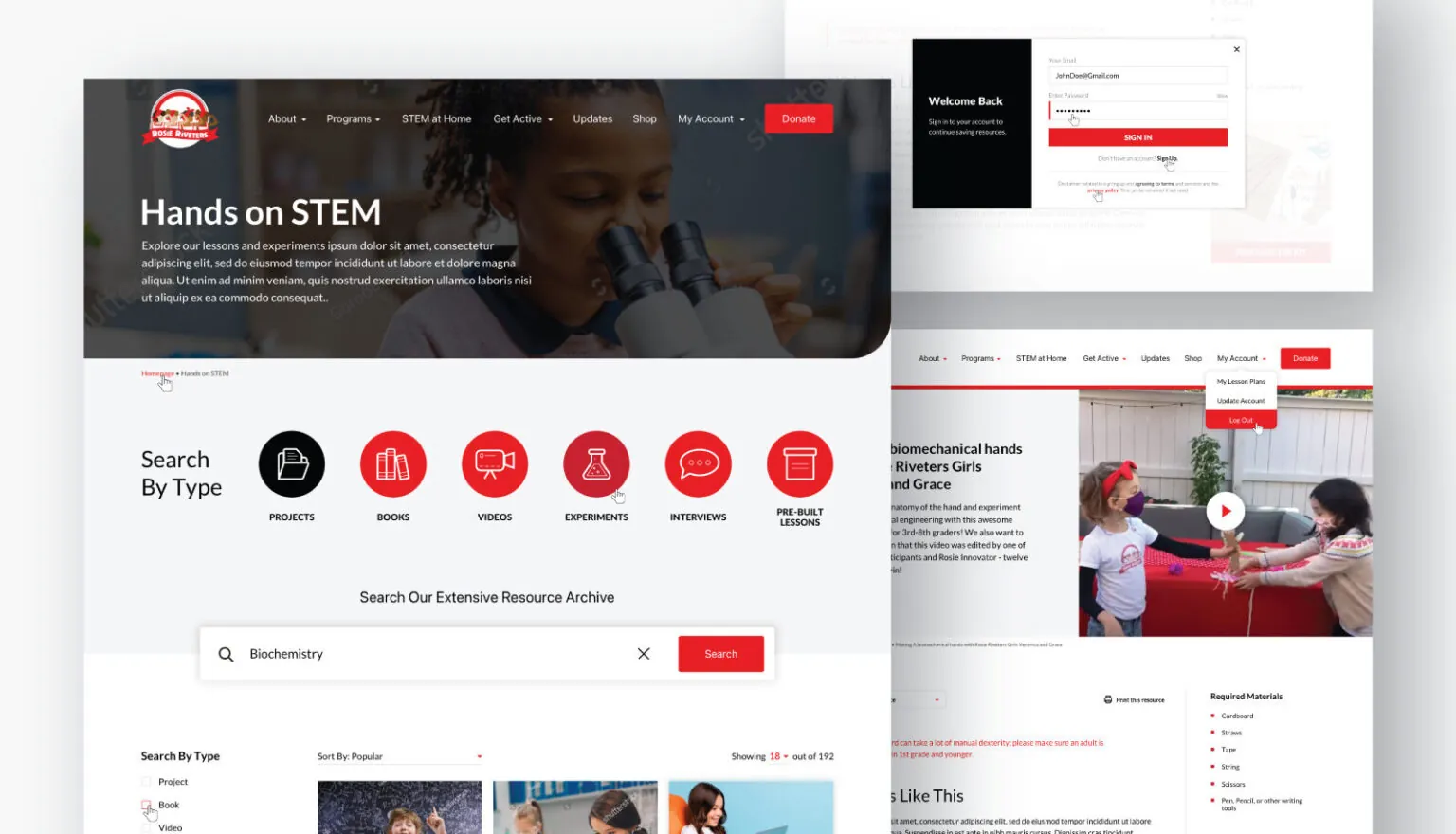
What Conversion-Focused Web Design Actually Means
Conversion-focused web design is not aggressive. It is not about popups everywhere, flashing buttons, or pushing people to act before they are ready.
It is about clarity and confidence.
A conversion-focused website:
- Communicates value immediately
- Guides users through clear decision paths
- Reduces confusion and hesitation
- Builds trust before asking for action
- Makes forms and next steps feel easy
Conversions can mean different outcomes depending on the business: booked consultations, demo requests, contact inquiries, calls, applications, or even deeper engagement that supports a longer sales cycle.
Why Websites Fail to Convert
Most websites that underperform are not broken. They are unclear.
Common conversion killers include:
- Weak above-the-fold messaging that does not explain value quickly
- Too many competing calls to action
- Navigation that hides the most important pages
- Dense content that is hard to scan
- Generic design that feels like every other site in the industry
- Slow pages or unstable mobile layouts
- Forms that ask too much or feel risky to submit
Conversion-focused design identifies these friction points and removes them without adding noise.
Conversion Starts With User Intent
Different visitors arrive with different intent. Some are ready to contact you now. Many are not.
Conversion-focused design supports multiple levels of readiness by:
- Answering common questions early
- Offering proof and context before asking for action
- Creating multiple paths to conversion based on intent
- Reducing uncertainty for users who are comparing options
This is why conversion is a UX strategy problem first, not a visual design problem.
UX Strategy as the Foundation for Conversion
We design for conversion by planning how users move through information, build trust, and decide.
Our UX strategy focuses on:
- Clear information hierarchy
- Logical page flow from awareness to action
- Scannable layouts that respect attention
- Navigation patterns that match real user expectations
- Reducing cognitive load at key decision moments
This work connects directly to our broader web design process, where structure and UX are validated before design is finalized.
Messaging Clarity That Builds Confidence
Conversion depends on how quickly users understand what you do and why it matters.
Conversion-focused messaging emphasizes:
- Clear positioning and differentiation
- Direct language that sounds human
- Outcomes framed around what the customer gets
- Objection handling without sounding defensive
- Specificity that reduces uncertainty
When messaging is vague, visitors hesitate. When messaging is clear, users move forward.
Design That Guides Attention Without Clutter
Visual design influences conversion by controlling what users notice first and what they understand next.
Conversion-focused design relies on:
- Clear visual hierarchy
- Consistent spacing and typography
- Strategic contrast for emphasis
- Predictable patterns across pages
- Design restraint that avoids distracting effects
We build interfaces that feel easy to follow, not busy.
Page Structure Built for Decision-Making
Strong conversion performance comes from intentional structure, not just strong visuals.
Conversion-focused page structure typically includes:
- Clear page purpose and a defined primary action
- Supporting context placed where it reduces hesitation
- Proof points near high-intent moments
- Logical progression from value to details to next steps
- Internal links that guide users to the most relevant pages
This structure often works best when paired with a disciplined website architecture foundation.
Calls to Action That Feel Natural
Calls to action should feel like the next logical step, not a demand.
Effective CTAs are:
- Clear and specific
- Placed where users are ready, not where the business wants them
- Supported by context and proof
- Consistent across key pages
We avoid CTA overload. Too many asks reduce action.
Forms Designed for Ease and Trust
Forms are a conversion moment. If the form feels annoying, risky, or unclear, users abandon it.
Conversion-focused form design includes:
- Asking for only what is needed
- Clear labels and helpful microcopy
- Setting expectations for what happens after submission
- Design consistency so the form feels trustworthy
- Mobile-first spacing and tap target clarity
Forms should feel safe, simple, and worth it.
Performance and Conversion Are Connected
Even strong UX and messaging can fail if the site feels slow or unstable. Speed impacts how credible your business feels in the first few seconds.
Performance supports conversion by:
- Reducing bounce during high-intent traffic
- Keeping users engaged as they scroll and explore
- Improving mobile experience in real-world conditions
- Reducing frustration during form completion
If speed is a priority, this work aligns with our website performance optimization services.
Conversion-Focused Design for Longer Sales Cycles
Not every conversion happens on the first visit. For high-consideration services, users often compare, validate, and return.
Conversion-focused websites support longer cycles by:
- Providing clear next steps for different intent levels
- Making proof easy to find without digging
- Using internal linking to guide deeper exploration
- Reducing uncertainty with transparent messaging
This approach is especially effective for professional services, B2B organizations, healthcare, education, and other markets where trust matters more than impulse.
How We Approach Conversion-Focused Web Design
Conversion is a system, not a trick. Our process is built to create clarity and momentum.
Our work often includes:
- Discovery focused on goals, audiences, and decision pathways
- Information architecture planning and page hierarchy definition
- Wireframes and UX validation before design polish
- Custom UI design and component systems
- Performance-minded development standards
- Launch planning and ongoing improvements
Many clients continue optimizing after launch through website optimization and ongoing support.
Who Benefits Most From Conversion-Focused Web Design
This approach is especially valuable for organizations that:
- Rely on inbound leads or inquiries
- Invest in SEO or paid campaigns and want better ROI
- Have strong offerings but unclear messaging
- Operate in saturated markets where differentiation matters
- Have longer decision cycles and need stronger trust signals
If your website plays a role in revenue, conversion-focused design should be intentional.
Why Rawcut Creative
We design websites that convert without compromising clarity or credibility.
By combining UX strategy, custom design, in-house graphic design, and performance-focused development, we help brands turn attention into action.