Industries Rawcut Creative Works With
Below are industries where organizations frequently rely on their website to communicate expertise, build credibility, and support business growth.
Healthcare, Dental, and Aesthetics
Medical buyers are choosing a person, not a vendor, and they are usually nervous while they do it. These sites carry more weight per page than almost any other category because the visitor is deciding whether to trust someone with their body. Healthcare is the category hub, with dedicated pages for medical practices, mental health, physical therapy, chiropractic, optometry, senior care, and veterinary practices.
Dental practices split by who they are trying to reach: cosmetic dentistry competes on transformation and case galleries, orthodontics on treatment timelines and financing clarity, and pediatric dentistry on reassuring a parent before it ever reassures a child.
Elective and aesthetic practices operate on different economics again, closer to retail than to medicine, with a buyer who researches for weeks and books on impulse. See med spas, dermatology, plastic surgery, and IV therapy.
Legal
Our deepest industry cluster, because legal search rewards specificity more than almost any other vertical. Someone searching after a car accident and someone searching to set up a trust want completely different pages, and a single law firm site that tries to serve both usually serves neither. We build practice-area depth: personal injury, criminal defense, family law, estate planning, business law, DUI defense, workers’ compensation, and immigration. The broader legal services page covers firms that need one site to carry several practice areas at once.
Finance and Insurance
Financial buyers are reading for credibility signals and compliance posture before they read for anything else, and the design has to survive that scrutiny without looking like it is trying to. Financial services anchors the cluster, with pages for financial advisors, wealth management, accounting firms, private equity, mortgage lending, and insurance agencies.
Home Services and Construction
The highest-intent search category we work in. A homeowner searching for an emergency service is minutes from calling someone, and the site’s only job is to be the one that gets called. Speed, phone prominence, service-area clarity, and proof of licensing do most of the work. See home services for the category view, then HVAC, plumbing, electrical, roofing, landscaping, pest control, cleaning services, and solar.
Construction runs on a slower clock and a larger ticket, where the site is being read as evidence that a firm finishes what it starts. General contractors, commercial construction, and remodeling each get their own page, because a homeowner planning a kitchen and a developer awarding a build have almost nothing in common as readers.
Real Estate and Property
Property websites live or die on how well they present inventory and how credibly they present the people behind it. Real estate covers the residential side, commercial real estate the institutional one, and real estate developers the hardest case of all, where the site is selling a vision that does not exist yet. Also property management, title and escrow, and interior design.
Industrial and Manufacturing
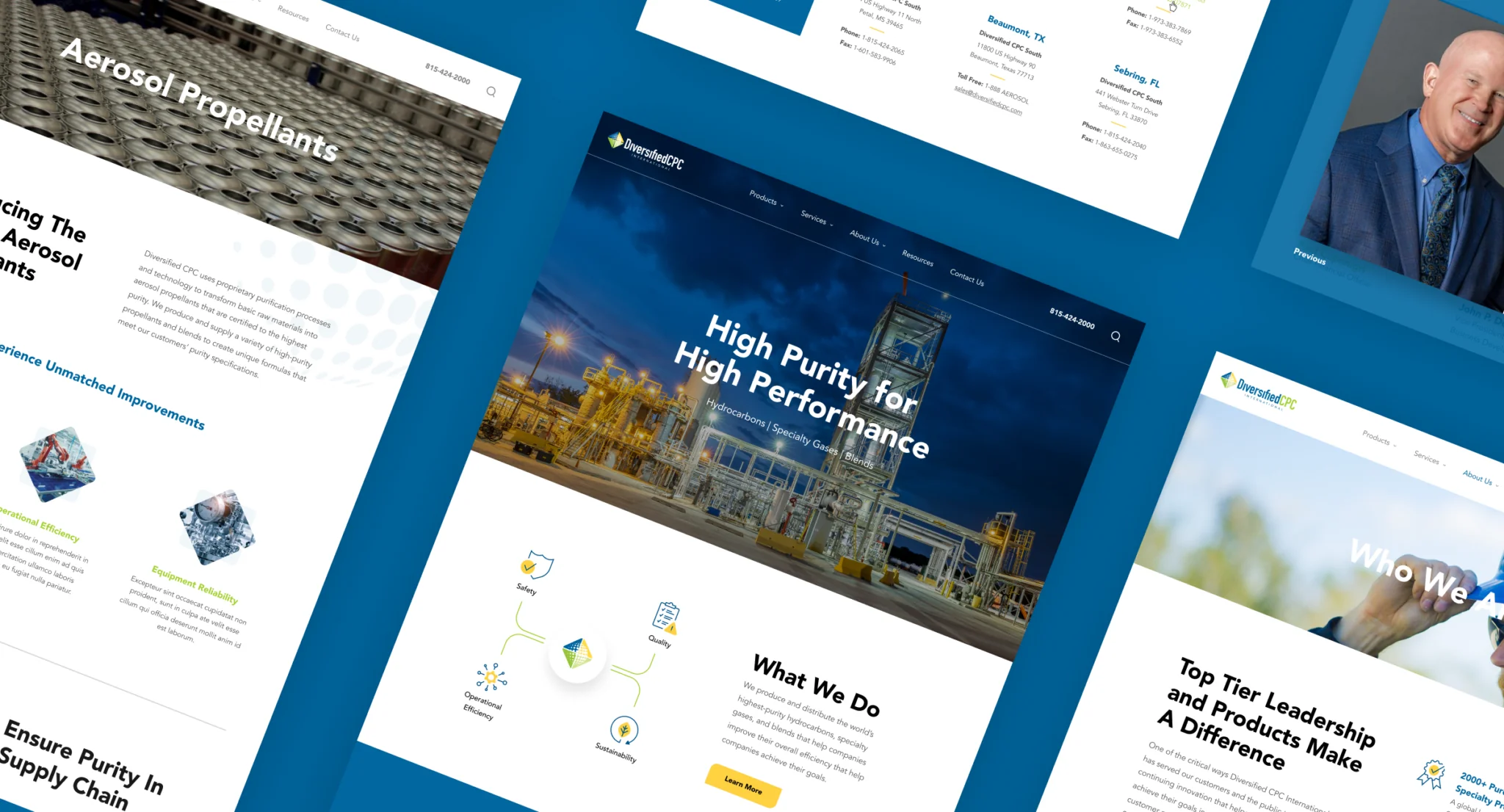
The category where most agency work goes wrong, because industrial buyers are technical and they can tell immediately whether a site was written by someone who understood the product. These pages are built around specifications, capabilities, and certifications rather than around lifestyle photography. Manufacturing leads the cluster, alongside metal fabrication, industrial distribution, aerospace, biotech, energy, and logistics.
Technology
Software buyers evaluate the site as a sample of the product. If the marketing site is slow or confusing, the assumption is that the software is too, and no amount of feature copy undoes that first impression. Technology is the hub, with pages for SaaS, IT services, cybersecurity, AI companies, startups, and B2B generally.
Food, Hospitality, and Fitness
Hospitality is the category where the website has to do something genuinely difficult: make someone want to be somewhere. Hospitality covers the broad case, with restaurants, breweries, catering, and event venues handled separately. Food and beverage addresses the B2B side, where the buyer is a distributor or a retail chain rather than a diner.
Fitness sells identity and follow-through more than it sells equipment. See fitness for studios and gyms broadly, and CrossFit for the affiliate model specifically, where community is the actual product.
Professional Services
Firms that sell expertise face a common problem: the thing being bought is invisible, so the site has to make judgment and process visible instead. Professional services covers the general case, with dedicated pages for engineering, architecture, and franchise systems, where the site has to serve prospective franchisees and end customers at the same time without confusing either.
Automotive
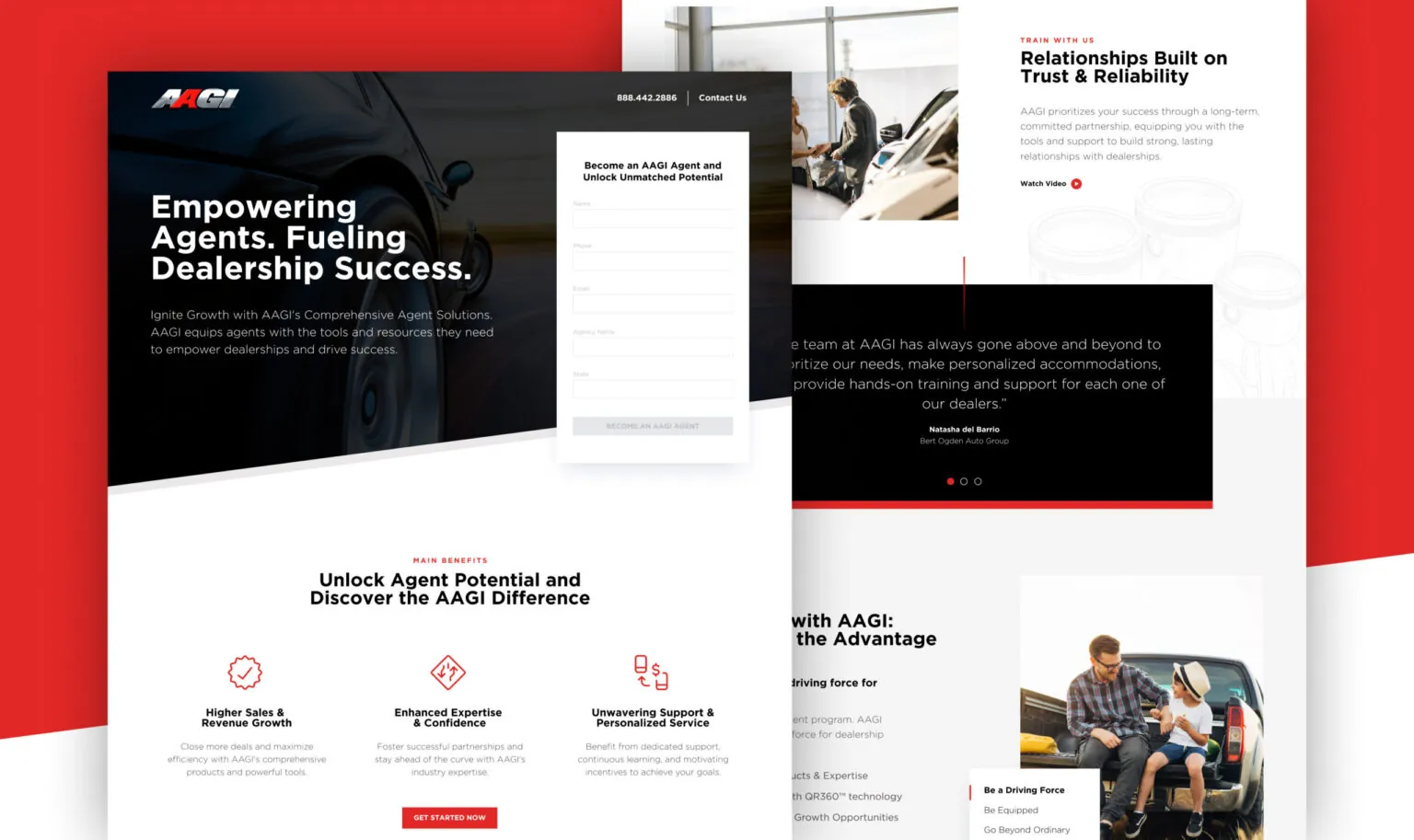
Automotive buyers arrive already comparing, usually with three tabs open and a price in mind. Automotive covers the category, with auto repair for the service side, where trust and turnaround time decide the call, and auto detailing for the appearance side, where the portfolio is the pitch.
Education, Media, Retail, and Nonprofit
Four categories that share a trait: the site is talking to more than one audience at once. Education sites serve prospective students, current families, and donors on the same navigation. Media and entertainment sites serve audiences and advertisers. Nonprofit sites serve the people being helped and the people funding the help, and those two groups want opposite things from a homepage. Retail sites carry the added job of moving a browser toward a store or a shelf.
What an Industry Page Actually Buys You
Industry expertise is the most claimed and least demonstrated thing in this business. Most agencies mean they once had a client in your category. What we mean is that we have researched how your buyer reads, what the competitive field in your category already looks like, and which search behavior actually precedes a purchase in your industry, and that the research happens before the design does. Each page above is that research written down, so you can judge whether we understand your business before you spend a dollar finding out.
Industry and Market, Together
Industry strategy and local strategy are not separate projects. A dental practice in Joliet competes against different practices, on different search terms, at different price points than one in Naples, and the site has to be built for the intersection rather than for either dimension alone. Our locations pages cover the market side of that, and every industry page above links to the metros where that industry actually concentrates.